<?xml version="1.0" encoding="utf-8"?>
<feed xmlns="http://www.w3.org/2005/Atom">
    <title>Madro&ntilde;o Landscape Design Studio: Madroño</title>
    <link rel="alternate" type="text/html" href="http://www.madrono.org/" />
    <link rel="self" type="application/atom+xml" href="http://www.madrono.org/atom.xml" />
    <id>tag:www.madrono.org,2010-07-08://1</id>
    <updated>2011-09-14T22:42:56Z</updated>
    <subtitle>Native Plants through a Modern Lens</subtitle>
    <generator uri="http://www.sixapart.com/movabletype/">Movable Type 4.34-en</generator>

<entry>
    <title>Special Event at California Academy of Sciences</title>
    <link rel="alternate" type="text/html" href="http://www.madrono.org/san-francisco-landscape/events/special-event-at-california-academy-of-sciences.html" />
    <id>tag:www.madrono.org,2011://1.66</id>

    <published>2011-09-21T20:23:42Z</published>
    <updated>2011-09-14T22:42:56Z</updated>

    <summary>Coffey speaks on modern design approaches using native plants in the built landscape.</summary>
    <author>
        <name>Madroño Landscape Design Studio</name>
        
    </author>
    
        <category term="Events" scheme="http://www.sixapart.com/ns/types#category" />
    
    <category term="education" label="education" scheme="http://www.sixapart.com/ns/types#tag" />
    
    <content type="html" xml:lang="en" xml:base="http://www.madrono.org/">
        <![CDATA[<img alt="native-plants-through-a-modern-lens.jpg" src="http://www.madrono.org/native-plants-through-a-modern-lens.jpg" width="533" height="800" class="mt-image-left" style="float: left; margin: 0 20px 20px 0;" /><b>MODERN &amp; NATIVE:<br />Contemporary Design Meets</b><div><b>California Native Plants</b><div><br /></div>Join Madroño founder and president Geoffrey Coffey for a talk and slide show on modern design approaches using California native plants in the built landscape.<div><br /></div><div><div><b>WHEN: &nbsp;</b><br />Sept. 21, 2011 from 4:30 - 6:30 p.m.<br /><div><br /></div></div><b>WHERE:&nbsp;</b><br />California Academy of Sciences</div><div>(Use Staff Entrance on Middle Drive East)</div><div>Golden Gate Park, San Francisco</div><div><br /></div><b>ADMISSION:&nbsp;</b><br />$20<div>(APLD members free)</div><div><br /></div>
More info here: <a href="http://www.robinalyse.com/flyers/Sept_Modern.html">Modern &amp; Native</a><div><br /></div>Program begins at 4:30 sharp. Meet at the staff entrance on Middle Drive East. Academy staff will escort us as a group to the lecture hall for this special event; please respect their time and be prompt.<div><br /></div>
<div>RSVP to&nbsp;Alan Good, <a href="mailto:AGood@calacademy.org">AGood@calacademy.org</a><br /><div><br clear="all" /><div>Sponsored by the San Francisco chapter of the Association of Professional Landscape Designers (APLD).</div> </div><div><br /></div></div></div>]]>
        
    </content>
</entry>

<entry>
    <title>Laundry to Landscape Pilot Program</title>
    <link rel="alternate" type="text/html" href="http://www.madrono.org/san-francisco-landscape/water/greywater/laundry-to-landscape-pilot-program.html" />
    <id>tag:www.madrono.org,2011://1.60</id>

    <published>2011-06-08T23:44:52Z</published>
    <updated>2011-06-15T00:26:13Z</updated>

    <summary>Free money from the city for greywater irrigation hardware.</summary>
    <author>
        <name>Madroño Landscape Design Studio</name>
        
    </author>
    
        <category term="Events" scheme="http://www.sixapart.com/ns/types#category" />
    
        <category term="Greywater" scheme="http://www.sixapart.com/ns/types#category" />
    
    <category term="education" label="education" scheme="http://www.sixapart.com/ns/types#tag" />
    <category term="waterwise" label="water-wise" scheme="http://www.sixapart.com/ns/types#tag" />
    
    <content type="html" xml:lang="en" xml:base="http://www.madrono.org/">
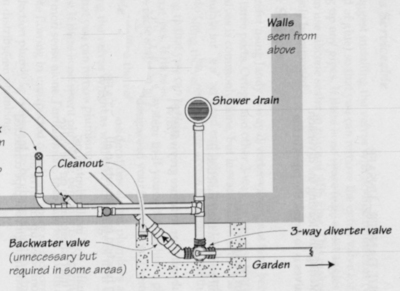
        <![CDATA[<a href="http://www.madrono.org/assets_c/2011/06/greywater-plan-107.html" onclick="window.open('http://www.madrono.org/assets_c/2011/06/greywater-plan-107.html','popup','width=666,height=486,scrollbars=no,resizable=no,toolbar=no,directories=no,location=no,menubar=no,status=no,left=0,top=0'); return false"><img src="http://www.madrono.org/assets_c/2011/06/greywater-plan-thumb-400x291-107.jpg" width="400" height="291" alt="greywater-plan.jpg" class="mt-image-right" style="float: right; margin: 0 0 20px 20px;" /></a>In a push for citizens to install greywater irrigation systems in their homes, the SFPUC (city water department) has launched a program to offset the cost of materials for qualifying households. &nbsp;The so-called Laundry-to-Landscape program requires a formal application with proof that the property has a working washing machine and a yard that is level or downsloping away from the machine's outflow. &nbsp;The first 150 qualifying households will receive a 95% subsidy toward the purchase of a hardware kit (hub connectors, three-way valves, etc.) to divert greywater from the sewers and use it to irrigate the garden.<div><br /></div> Only 1- or 2-unit residential buildings are eligible, and only these buildings are allowed to install greywater systems without a permit from the building department. To encourage and promote the use of graywater systems in larger and/or commercial or industrial buildings, the SFPUC also offers a rebate up to $225 toward the cost of obtaining a permit. To be eligible, the graywater system must be used for subsurface irrigation only. <div><br /></div><div>For more information on the program, check the SFPUC's dedicated&nbsp;<a href="http://sfwater.org/detail.cfm/MC_ID/13/MSC_ID/168/MTO_ID/758/C_ID/5421">greywater page</a>. &nbsp;For help with the application and permitting process, or to order a professional greywater design for your property,&nbsp;<a href="http://www.madrono.org/contact.html">contact Madroño</a>.</div><div><div><br /></div><div><br /></div></div>]]>
        
    </content>
</entry>

<entry>
    <title>Native Carex and Iris in Miraloma Park</title>
    <link rel="alternate" type="text/html" href="http://www.madrono.org/san-francisco-landscape/plants/native-plants/native-carex-and-iris-in-miraloma-park.html" />
    <id>tag:www.madrono.org,2011:/media//1.21</id>

    <published>2011-05-16T19:48:01Z</published>
    <updated>2011-06-15T17:50:19Z</updated>

    <summary>A winning design for the Stanford Heights Reservoir.</summary>
    <author>
        <name>Geoffrey Coffey</name>
        <uri>http://www.geoffreycoffey.com</uri>
    </author>
    
        <category term="Natives" scheme="http://www.sixapart.com/ns/types#category" />
    
    <category term="carexpansa" label="Carex pansa" scheme="http://www.sixapart.com/ns/types#tag" />
    <category term="design" label="design" scheme="http://www.sixapart.com/ns/types#tag" />
    <category term="miralomapark" label="Miraloma Park" scheme="http://www.sixapart.com/ns/types#tag" />
    <category term="waterwise" label="water-wise" scheme="http://www.sixapart.com/ns/types#tag" />
    
    <content type="html" xml:lang="en" xml:base="http://www.madrono.org/">
        <![CDATA[<img alt="Planting Plan" src="http://www.madrono.org/shr_plan.jpg" width="775" height="436" class="mt-image-center" style="text-align: center; display: block; margin: 0 auto 20px;" /><img alt="reservoir planting, long crop" src="http://www.madrono.org/shr_carex_iris_poppy250x600.jpg" width="250" height="600" class="mt-image-right" style="float: right; margin: 0 0 20px 20px;" /><div><div>Score a point for the city planners: their new landscaping at the Stanford Heights Reservoir, in the&nbsp;San Francisco&nbsp;neighborhood of&nbsp;Miraloma Park uses locally appropriate native plants in simple bold strokes of panache. &nbsp;The design is a triumph of simplicity.</div><div><br /></div>We are so frequently dismayed by the busy, overwrought planting plans brought forth by cookie-cutter "native plant designers" taking the wildlands as their only inspiration, who employ a hodgepodge of (too) many plant species because "that's how it looks in nature."</div><div><br /></div><div>Here, the design chooses two beautiful species as a foundation for all the plantings adjacent to sidewalks:&nbsp;<a href="http://www.madrono.org/plants/lawn-alternatives/in-praise-of-carex-pansa.html"><i>Carex pansa</i></a>&nbsp;and Pacific Coast Iris.</div><div><br /></div><div>The Pacific Dune Sedge (<i>Carex pansa</i>) looks like a &nbsp;meadow grass, and it spreads underground by rhizomes like running bamboo. &nbsp;It grows well in heavy soil (though it prefers sand) and can tolerate sun, drought, and the traffic of dogs.</div><div><br /></div><div>The iris is gorgeous and locally authentic; Its blue flower and long pointed leaf may be as emblematic of San Francisco as any plant I know.</div><div><br /></div><div>Together they bind the perimeter of the reservoir with sustainability and beauty. &nbsp;Water-wise, insect-friendly, pleasing to the eye, and mostly self-sufficient -- what more can you ask?</div><div><br /></div><div>The plan also called for sowing seed of blue-eyed grass (which didn't come up) and California poppy (which did). &nbsp;Count my vote a yawn. &nbsp;Haven't we had enough poppies? &nbsp;So many other local and lovely annual wildflowers to choose from -- anybody for <i>Clarkia</i>? &nbsp;<i>Collinsia</i>? &nbsp;<i>Lasthenia</i>? &nbsp;<i>Limnanthes</i>? &nbsp;Anybody?</div>]]>
        <![CDATA[<img alt="Native Shrubs" src="http://www.madrono.org/shr_shrubs.jpg" width="400" height="600" class="mt-image-left" style="float: left; margin: 0 20px 20px 0;" /><div>Another quibble: the footpath between Rockdale and Agua on the western edge of the reservoir has been badly overplanted, albeit with a wide selection of wonderful native shrubs. &nbsp;Go there to see Ceanothus, Ribes, Redbud, Spicebush, Twinberry, and more (pictured left) .... but don't expect the footpath to remain passable much longer. &nbsp;Each of these shrubs will grow to be 8-10 feet wide or more, and they are planted together on 3-foot centers. &nbsp;Was the intention to close off the footpath to all human traffic? &nbsp;That will be the effect.</div><div><br /></div><div>Two of these shrubs bloomed especially well this year:</div><div><br /></div><div><i>Ribes sanguineum</i> var. <i>glutinosum</i>, a deciduous 12-foot shrub also known as flowering current, produces bushels of long pink-and-while flower tassels from bare branches in February, then leafs out fully in early spring. &nbsp;It grows well in sun or shade and can withstand both garden water and the total drought of "benign neglect" -- a good shrub to know for any gardener interested in native plants.</div><div><br /></div><div><i>Ceanothus</i> or California Lilac, another emblematic plant (it occurs natively only in CA) is a sun-loving drought-tolerant evergreen whose genus contains over 70 species from groundcover to tree; this one appears to be the cultivar 'Dark Star,' which is a 6-foot shrub covered with brilliant blue blossoms in spring, plus an occasional bonus bloom in fall. &nbsp;The flowers look like small fluffy pinecones and are frequently ravished by bumblebees.</div><div><br /></div><img alt="Horsetail" src="http://www.madrono.org/shr_horsetail.jpg" width="600" height="400" class="mt-image-right" style="float: right; margin: 0 0 20px 20px;" /><div>Meanwhile, out on the eastern margins of the reservoir where the underground river runs, we find an interesting native plant not specified in the plans at all. &nbsp;The horsetail (<i>Equisetum arvense</i>) growing at the top and bottom corners of Isola St. are part of an existing native population that runs like a green ribbon along the high water table from here all the way straight uphill to the north-facing slope of Mount Davidson. &nbsp;Horsetail is an ancient plant (from the Carboniferous Period of the Paleozoic Era) and it can be highly invasive, especially outside of its native range; but in this context, it belongs here. &nbsp;Horsetail always indicates the presence of abundant groundwater -- looks like there was a reason they built the reservoir here.</div><div><br /></div><div>Following are a few more pictures taken on a recent walk around the reservoir:</div><div><br /></div><div><img alt="Iris on Agua" src="http://www.madrono.org/shr_agua.jpg" width="600" height="400" class="mt-image-right" style="float: right; margin: 0 0 20px 20px;" /></div><div>Nice patch of Iris, Carex, and poppy on Agua St.</div><br clear="all" /><div><img alt="Pacific Coast Iris and Carex pansa" src="http://www.madrono.org/shr_teresita_agua.jpg" width="600" height="400" class="mt-image-right" style="float: right; margin: 0 0 20px 20px;" />At the corner of Agua, Teresita, and Isola: robust populations of the Carex and Iris looking fine.  Notice the tangled mess of annual weedy grasses on the other side of the fence.</div><br clear="all" /><img alt="Iris Carex &amp; Poppy, close" src="http://www.madrono.org/shr_carex_iris_poppy.jpg" width="600" height="400" class="mt-image-right" style="float: right; margin: 0 0 20px 20px;" />To be clear: the choice of Carex pansa and Pacific Coast Iris as foundation plantings should be celebrated.  This is a winning combination.]]>
    </content>
</entry>

<entry>
    <title>Talk &amp; Slide Show at Brisbane Library</title>
    <link rel="alternate" type="text/html" href="http://www.madrono.org/san-francisco-landscape/events/slide-show-at-brisbane-library.html" />
    <id>tag:www.madrono.org,2011://1.23</id>

    <published>2011-05-14T20:37:39Z</published>
    <updated>2011-06-16T00:15:32Z</updated>

    <summary>Coffey speaks on local native plants in landscape design.</summary>
    <author>
        <name>Madroño Landscape Design Studio</name>
        
    </author>
    
        <category term="Events" scheme="http://www.sixapart.com/ns/types#category" />
    
    <category term="education" label="education" scheme="http://www.sixapart.com/ns/types#tag" />
    
    <content type="html" xml:lang="en" xml:base="http://www.madrono.org/">
        <![CDATA[<img alt="" src="http://www.madrono.org/media/DH-wall/diamondheights06.jpg" width="600" height="400" class="mt-image-left" style="float: left; margin: 0 20px 20px 0;" />Join Madroño founder and president Geoffrey Coffey for a talk and slide show at the 
Brisbane Library on modern gardens using locally appropriate native 
plants.<div><br /></div><div><div><b>WHEN: &nbsp;</b><br>May 14, 2011 from 2-3 p.m.<br /><div><br /></div></div><b>WHERE:&nbsp;</b><br>250 Visitacion Ave.<br>Brisbane, CA 94005</div><div><br /></div><b>ADMISSION: </b><br>Free!<br clear="all"><div>Sponsored by the Santa Clara Valley chapter of the California Native Plant Society.</div> ]]>
        
    </content>
</entry>

<entry>
    <title>A Word on Modern Fences</title>
    <link rel="alternate" type="text/html" href="http://www.madrono.org/san-francisco-landscape/hardscaping/fences/a-word-on-modern-fences.html" />
    <id>tag:www.madrono.org,2011://1.62</id>

    <published>2011-05-10T17:16:40Z</published>
    <updated>2011-06-15T17:22:08Z</updated>

    <summary>The key to the sublime lies in transparency to sunlight.</summary>
    <author>
        <name>Geoffrey Coffey</name>
        <uri>http://www.geoffreycoffey.com</uri>
    </author>
    
        <category term="Fences" scheme="http://www.sixapart.com/ns/types#category" />
    
        <category term="Wood" scheme="http://www.sixapart.com/ns/types#category" />
    
    <category term="carpentry" label="carpentry" scheme="http://www.sixapart.com/ns/types#tag" />
    <category term="design" label="design" scheme="http://www.sixapart.com/ns/types#tag" />
    <category term="illumination" label="illumination" scheme="http://www.sixapart.com/ns/types#tag" />
    
    <content type="html" xml:lang="en" xml:base="http://www.madrono.org/">
        <![CDATA[<img alt="Modern Fence in San Francisco" src="http://www.madrono.org/jin-fence-with-myrica.jpg" width="600" height="400" class="mt-image-left" style="float: left; margin: 0 20px 20px 0;" /><div>Urban living means density, and for city back yards that means fencing: we need clean lines of agreement on where my property ends and yours begins.</div><div><br /></div>But so many existing fences in the city are ugly, common, built on the cheap, installed by rote with no insight, like mere place-holders. &nbsp;We swoon at the magnitude of lost opportunities. &nbsp;If&nbsp;well designed, the fence can strive for art&nbsp;even&nbsp;as it performs its necessary, divisive duties. &nbsp;The key to the sublime lies in transparency to sunlight.]]>
        <![CDATA[<img alt="Horizontal Fence" src="http://www.madrono.org/sflandscapemodernfence1.jpg" width="600" height="300" class="mt-image-right" style="float: right; margin: 0 0 20px 20px;" /><div>At this San Francisco residence, we wanted to maximize the sun in a small back yard of 25' x 40' with southern exposure on a northeast-facing slope. &nbsp;From the back window of the house, one sees the soft morning sun crossing the yard at a low angle from the left, and the strong rays of the deepening afternoon follow a decreasing angle from the right. &nbsp;A non-transparent fence would block all those desirable hours of low sun.</div><div><br /></div><div>The fence looks mostly opaque when viewed from straight on, but sunlight descending at an angle can pass through (see photos above). &nbsp;We lay the horizontal 1x4 redwood slats on alternating sides of the posts, with a gap equal to the width of the slat, thus to provide the maximum transmission of angled sunlight while blocking out the straight-ahead view.</div><div><br /></div><div>A beveled cap sitting proud 1" on both sides gives the fence a more finished appearance, and is fitted on the inside edge with low-voltage rail lights for a lovely accent of illumination in the evenings. All surface lumber was treated with Armstrong's transparent redwood stain, to protect the wood from the weather and to bring out its natural color and luster.<br clear="all" /></div><div><br></div><img alt="split-rail grapestake fence" src="http://www.madrono.org/sflandscapemodernfence3.jpg" width="415" height="640" class="mt-image-left" style="float: left; margin-top: 0px; margin-right: 20px; margin-bottom: 20px; margin-left: 0px; " /><div>Depending of the proximity of neighbors (or lack thereof), some fences may take further steps toward visual transparency. &nbsp;Consider this split-rail grapestake fence (pictured left) on a private property in Marin, where the lot sizes are more generous and the neighbors are few. Relieved of the pressure to block the view, this fence delivers a wonderful "peekaboo" effect, teasing the eye with a glimpse of the colors and textures next door. &nbsp;The grapestake slats are installed on alternating sides of the rail, with a gap equal to twice the width of the slat. &nbsp;Such are the allowances we can make for the view when privacy is not a concern.</div><div><br /></div><div>Another benefit of the alternating slat: both sides of the fence will have an attractive face. &nbsp;Compare this to most standard fences, which are built with all the slats on one side (usually on the side of the guy who paid for the fence), and the neighbors are left to look at all the ugly pressure-treated posts and rails, and the back side of the slats, which are often left untreated and unpainted on that side, thus weathering badly over time. &nbsp;What a pity that so many landscapers continue to follow this same misguided pattern. &nbsp;Nobody should be asked to look at the exposed framing of a cheap and badly designed fence.</div><div><br /></div><div>Good fences don't make good neighbors, but they can deliver a sense of harmony to the politics of the property line, even while serving&nbsp;in their own right&nbsp;as light-filled objects of subtle&nbsp;grace and&nbsp;beauty in the garden.]]>
    </content>
</entry>

<entry>
    <title>LUCCON Translucent Concrete</title>
    <link rel="alternate" type="text/html" href="http://www.madrono.org/san-francisco-landscape/materials/concrete/luccon-translucent-concrete.html" />
    <id>tag:www.madrono.org,2011:/media//1.29</id>

    <published>2011-04-19T22:07:08Z</published>
    <updated>2011-06-15T00:23:25Z</updated>

    <summary>Luccon is a light-transmitting concrete, one of the most beautiful and ethereal materials we have seen.</summary>
    <author>
        <name>Madroño Landscape Design Studio</name>
        
    </author>
    
        <category term="Concrete" scheme="http://www.sixapart.com/ns/types#category" />
    
    <category term="illumination" label="illumination" scheme="http://www.sixapart.com/ns/types#tag" />
    <category term="modernmaterials" label="modern materials" scheme="http://www.sixapart.com/ns/types#tag" />
    <category term="translucentconcrete" label="translucent concrete" scheme="http://www.sixapart.com/ns/types#tag" />
    
    <content type="html" xml:lang="en" xml:base="http://www.madrono.org/">
        <![CDATA[<div><a href="http://www.madrono.org/media/assets_c/2011/05/luccon1-92.html" onclick="window.open('http://www.madrono.org/media/assets_c/2011/05/luccon1-92.html','popup','width=675,height=675,scrollbars=no,resizable=no,toolbar=no,directories=no,location=no,menubar=no,status=no,left=0,top=0'); return false"><img src="http://www.madrono.org/media/assets_c/2011/05/luccon1-thumb-300x300-92.jpg" width="300" height="300" alt="luccon1.jpg" class="mt-image-left" style="float: left; margin: 0 20px 20px 0;" /></a><a href="http://www.luccon.com/en/material.php">Luccon</a> is a light-transmitting concrete made with multiple sheets of thin optic cables layered into fine-grained concrete cast in prefabricated molds.&nbsp;It allows sunlight, shadows, and colors to project through the concrete -- one of the most beautiful and ethereal materials we have seen.</div><div><br /></div><div>Because the fibers have such a small diameter, the strength and durability of Luccon is the same as for that of conventional concrete. The blocks appear comparably massive as well as translucent, with an unique light pattern created by chance. Blocks can be cut to achieve elements of variable thickness and size.</div><div><br /></div><div>The most striking effect is the silhouetting of shadows cast behind the concrete. &nbsp;It raises wonderful possibilities for use as a garden screen, for example, or as the wall for an outdoor shower.</div><div><br /></div>]]>
        <![CDATA[<div><a href="http://www.madrono.org/media/assets_c/2011/05/luccon2-93.html" onclick="window.open('http://www.madrono.org/media/assets_c/2011/05/luccon2-93.html','popup','width=675,height=675,scrollbars=no,resizable=no,toolbar=no,directories=no,location=no,menubar=no,status=no,left=0,top=0'); return false"><img src="http://www.madrono.org/media/assets_c/2011/05/luccon2-thumb-300x300-93.jpg" width="300" height="300" alt="luccon2.jpg" class="mt-image-left" style="float: left; margin: 0 20px 20px 0;" /></a>Luccon is available in the following standard sizes (warning: German manufacturer produces in the metric system):</div><div><br></div>
<div>100 x 50 x 2 cm<br />
120 x 60 x 2 cm<br />
200 x 70 x 3 cm<br />
270 x 70 x 3 cm<br /></div><div><br /></div><div>They also make LUCCOtherm (pictured left), which is five times thicker at 15 cm and insulated for use as a perimeter structural element; and a fine veneer product 0.8 mm thick, the filigree side of massive translucent concrete, which can be shaped in 3-D and cut, drilled, and/or glued.</div>]]>
    </content>
</entry>

<entry>
    <title>Deck as Bridge across Concrete Trench</title>
    <link rel="alternate" type="text/html" href="http://www.madrono.org/san-francisco-landscape/hardscaping/decks/deck-as-bridge-across-concrete-trench.html" />
    <id>tag:www.madrono.org,2011:/media//1.2</id>

    <published>2011-03-09T14:25:06Z</published>
    <updated>2011-06-15T00:22:39Z</updated>

    <summary>Diagonal deck opens up the landscape to human access.</summary>
    <author>
        <name>Geoffrey Coffey</name>
        <uri>http://www.geoffreycoffey.com</uri>
    </author>
    
        <category term="Decks" scheme="http://www.sixapart.com/ns/types#category" />
    
        <category term="Natives" scheme="http://www.sixapart.com/ns/types#category" />
    
    <category term="carpentry" label="carpentry" scheme="http://www.sixapart.com/ns/types#tag" />
    <category term="circulation" label="circulation" scheme="http://www.sixapart.com/ns/types#tag" />
    <category term="design" label="design" scheme="http://www.sixapart.com/ns/types#tag" />
    <category term="grassland" label="grassland" scheme="http://www.sixapart.com/ns/types#tag" />
    
    <content type="html" xml:lang="en" xml:base="http://www.madrono.org/">
        <![CDATA[Landscape design can bridge otherwise impassable hurdles.<br /><br />

Consider the case of this San Francisco backyard: a sheer slope on the southeast face of Mount Davidson, where a concrete drainage trench carries winter's seasonal river and then runs dry for summer and fall.  

The trench cuts off houses from their gardens and limits human access to the yards uphill.  At this particular house, the existing deck was built out to the edge of the trench, with no means of getting across.<br />

<br /><img alt="Los Palmos -- BEFORE" src="http://www.senorcafe.com/archives/lospalmos_before1.jpg" width="600" height="400" align="left" hspace="10" />Question: How to deal with this ugly yet necessary piece of engineering?<br clear="all" />

<br /><img alt="Los Palmos -- AFTER" src="http://www.senorcafe.com/archives/diagonaldeck_600.jpg" width="600" height="450" hspace="10" align="right" />Answer: Add another level of deck to bridge the gap.  Set the platform at an angle to diverge from the rectangular facade of the house, and to suggest triangular shapes in the landscape.  Cantilever all four edges 24" over the beams, thus hiding the posts so the deck appears to float above the ground.<br /><br />This deck, with bench and arbor, is both a place to inhabit and to pass through.  We cut a path in switchbacks up the slope from the point of contact with the platform, removed all french broom, fennel, and ivy from the hill, and replanted with native pinegrass, junegrass, and needlegrass; a field of silver lupine and scattered Ceanothus to attract  butterflies, especially the fabled <a href="http://www.sfgate.com/cgi-bin/article.cgi?f=/c/a/2010/05/06/BA5O1DAK8A.DTL" rel="nofollow">Mission Blue</a>; elderberries and manzanitas for bird-friendly flowers and berries; and more.<br clear="all" />]]>
        <![CDATA[<img alt="Los Palmos planting plan" src="http://www.senorcafe.com/archives/lospalmosdesign.gif" align="left" hspace="10" width="600" height="395" /><div>We also drilled 2-inch-diameter holes through the bottom of the trench and filled them <i>Carex barbarae</i>, the large aggressive Santa Barbara river sedge.  One year later, the Carex plugs have expanded and colonized the edges of the trench via underground runners; soon it will cover the entire trench from view.</div><br /><div>Between the trench and the existing deck, we put Iris and "California barley" (<i>Hordeum brachyantherum</i>), the gorgeous wheat-like bunchgrass that grows in floodplains and thus enjoys cycles of seasonal inundation and drought.  The result is a beautiful and self-sustaining, butterfly-attractive, site-appropriate tableau.</div><br /><img alt="Access to the Garden" src="http://www.senorcafe.com/archives/access.jpg" width="600" height="450" hspace="10" align="right" /><div>We thereby join this backyard garden to its watershed, and encourage human circulation into the system via built objects both durable and pleasing to the eye.  Formerly a weedy mess to be eyed and lamented from below, the back yard now lies transformed into a place we wish to enter, to walk through, to inhabit.&nbsp;</div><div><br /></div><div>Onward and upward with modern landscape design!</div>]]>
    </content>
</entry>

<entry>
    <title>In Praise of Carex Pansa</title>
    <link rel="alternate" type="text/html" href="http://www.madrono.org/san-francisco-landscape/plants/lawn-alternatives/in-praise-of-carex-pansa.html" />
    <id>tag:www.madrono.org,2011:/media//1.20</id>

    <published>2011-02-22T14:27:20Z</published>
    <updated>2011-06-15T00:21:49Z</updated>

    <summary>A low-maintainence, drought-tolerant lawn alternative.</summary>
    <author>
        <name>Geoffrey Coffey</name>
        <uri>http://www.geoffreycoffey.com</uri>
    </author>
    
        <category term="Lawn Alternatives" scheme="http://www.sixapart.com/ns/types#category" />
    
        <category term="Natives" scheme="http://www.sixapart.com/ns/types#category" />
    
    <category term="carexpansa" label="Carex pansa" scheme="http://www.sixapart.com/ns/types#tag" />
    <category term="droughttolerant" label="drought-tolerant" scheme="http://www.sixapart.com/ns/types#tag" />
    <category term="lowmaintenance" label="low-maintenance" scheme="http://www.sixapart.com/ns/types#tag" />
    
    <content type="html" xml:lang="en" xml:base="http://www.madrono.org/">
        <![CDATA[<img alt="carex_pansa200x300.jpg" src="http://www.madrono.org/carex_pansa200x300.jpg" width="200" height="300" class="mt-image-left" style="float: left; margin: 0 20px 20px 0;" />Consider the sedge (genus <i>Carex</i>), that vigorous and beautiful groundcover, when thinking about plausible substitutes for lawn.<div><br /></div><div>It may look like grass, but the sedge is a botanically distinct member of a completely different family. &nbsp;With an estimated 2000 species worldwide, the sedges can offer many different sizes, colors, and exotic textures for the adventurous landscape designer.<br /><div><br /></div><div>However, here in the American West we should always be aware of garden water needs (or lack thereof), thus restricting our range of choice -- most Carex species need lots of water.</div><div><br /></div><div>But not the Pacific Dune Sedge (<i>Carex pansa</i>), found natively in sand dunes from central California to British Columbia. &nbsp;It has grown here since before the time of gardeners and water hoses; it drinks when it rains. &nbsp;This makes it an excellent choice for low-maintainence, drought-tolerant alternative lawns in the San Francisco Bay Area.</div></div>]]>
        <![CDATA[<img alt="Bluestone risers with Carex pansa" src="http://www.madrono.org/bluestone_carex.jpg" width="300" height="200" align="right" hspace="10" class="mt-image-none" style="" />A hardy perennial groundcover, Carex pansa spreads by a rhizome, forming a solid carpet of green that soon becomes impenetrable by most weeds. &nbsp;In the garden, it can be mowed periodically to keep it tidy (as in the planter box pictured right); or just let the blades grow to their full lengths of 18" for the "wild meadow" look. Uncut Carex tends to flop over in the direction of any grade change, or with the prevailing wind, with a pleasant "flowing" texture like the ripples of a waterfall.<div><br /></div><div>Carex pansa is available from seed, but that is a recipe for disaster -- unless you fancy the prospect of crawling around on your knees with a tweezers to separate the weeds from the&nbsp;seedling&nbsp;sedges. &nbsp;We install it&nbsp;<a href="http://www.baynatives.com/?SC=plant-list.php&amp;fltr=carex+pansa">by the plug</a>, which gives much better control. &nbsp;Planting at 10" triangular spacing gives us the optimal ratio of 1.7 plugs per square foot, a cost-effective solution for good one-season coverage.</div><div><div><br /></div><div><br /><div><img alt="carex_pansa_plug_tray.jpg" src="http://www.madrono.org/carex_pansa_plug_tray.jpg" width="700" height="469" class="mt-image-none" style="" /></div></div></div><div><br /></div><div>We wish more of our clients would give Carex pansa a try.</div>]]>
    </content>
</entry>

<entry>
    <title>Songwood</title>
    <link rel="alternate" type="text/html" href="http://www.madrono.org/san-francisco-landscape/materials/wood/songwood.html" />
    <id>tag:www.madrono.org,2011://1.25</id>

    <published>2011-02-02T22:56:09Z</published>
    <updated>2011-06-15T00:20:54Z</updated>

    <summary>Beautiful, sustainable lumber from recycled waste.</summary>
    <author>
        <name>Madroño Landscape Design Studio</name>
        
    </author>
    
        <category term="Wood" scheme="http://www.sixapart.com/ns/types#category" />
    
    <category term="modernmaterials" label="modern materials" scheme="http://www.sixapart.com/ns/types#tag" />
    <category term="reclaimedlumber" label="reclaimed lumber" scheme="http://www.sixapart.com/ns/types#tag" />
    
    <content type="html" xml:lang="en" xml:base="http://www.madrono.org/">
        <![CDATA[<img alt="songwood-shorter.jpg" src="http://www.madrono.org/songwood-shorter.jpg" width="200" height="592" class="mt-image-left" style="float: left; margin: 0 20px 20px 0;" />This high-tech lumber from Boulder(CO)-based <a href="http://etimberr.com/" rel="nofollow">Engineered Timber Resources</a> is manufactured from 100% reclaimed and recycled Poplar wood veneer sourced as waste from the furniture and pulp industries.&nbsp;<div><br /></div><div>The reclaimed fibers are cleaned and sorted by color, then kiln-dried, layered to resemble the texture of real wood, mixed with a low-VOC resin, compressed under 1800 tons of pressure, and finally cured with slow heat. &nbsp;</div><div><br /></div><div>The resulting log is not only durable and hard-wearing, but also extremely stable. 

And its appearance can be customized based on the raw material inputs and the desired outcome; the product can be infused with organic dyes and colorants before compression, for a solid-body integral color that is therefore sandable.</div><div><br /></div><div>Songwood can be milled into any shape and used for any of the traditional interior or exterior applications of regular wood.</div><div><br /></div><div>In addition to Songwood, the company produces other modern reclaimed wood products including BURL (designed with a marbleized texture), Mulberry (compressed mulberry branches sourced as waste from the silk industry), and many varieties of compressed bamboo fiber (in colors and textures both natural and dyed to resemble exotic species).</div><div><br /></div><div>A round of applause, if you please, for ETR and other manufacturers who divert waste from the landfills to create attractive and long-lasting building materials.</div>]]>
        
    </content>
</entry>

<entry>
    <title>To Build a Green Wall</title>
    <link rel="alternate" type="text/html" href="http://www.madrono.org/san-francisco-landscape/vertical-landscaping/los-altos-green-wall.html" />
    <id>tag:www.madrono.org,2009:/blog//1.3</id>

    <published>2011-01-13T14:42:48Z</published>
    <updated>2011-06-15T00:20:11Z</updated>

    <summary>Anatomy of a green wall: perforated steel, coconut coir, and California native plants.</summary>
    <author>
        <name>Geoffrey Coffey</name>
        <uri>http://www.geoffreycoffey.com</uri>
    </author>
    
        <category term="Natives" scheme="http://www.sixapart.com/ns/types#category" />
    
        <category term="Retaining Walls" scheme="http://www.sixapart.com/ns/types#category" />
    
        <category term="Steel" scheme="http://www.sixapart.com/ns/types#category" />
    
        <category term="Vertical Landscaping" scheme="http://www.sixapart.com/ns/types#category" />
    
    <category term="design" label="design" scheme="http://www.sixapart.com/ns/types#tag" />
    <category term="modernmaterials" label="modern materials" scheme="http://www.sixapart.com/ns/types#tag" />
    <category term="perforatedsteel" label="perforated steel" scheme="http://www.sixapart.com/ns/types#tag" />
    
    <content type="html" xml:lang="en" xml:base="http://www.madrono.org/">
        <![CDATA[The marriage of living plants and cold steel ranks among the most enjoyable elements of practicing landscape design in the San Francisco Bay Area.<br /><br clear="all" />

<img alt="Green Wall -- live plantable retaining wall by Madrono landscape design studio" src="http://www.senorcafe.com/archives/09summer02.jpg" width="600" height="400" align="left" hspace="10" />SCENARIO: Single-family residence on steep 2-acre property in Los Altos Hills, California.  The lovely and level back patio was marred by the slope immediately above it: ugly bare dirt, too steep for traditional planting, and eroding at the base of the house's diagonal support beams.  The situation called for a bold stroke of design creativity.<br clear="all" />

<br /><img alt="Big Bad Slope -- BEFORE" src="http://www.senorcafe.com/archives/viscainobefore.jpg" width="600" height="400" align="left" hspace="10" />QUESTION: How to turn this liability -- a barren and degraded slope -- into a lush and attractive asset?<br clear="all" />

<br /><a href="http://www.madrono.org/landscaping.html" target="_blank"><img alt="Big Bad Slope -- AFTER" src="http://www.senorcafe.com/archives/viscainoafter.jpg" width="600" height="400" align="left" hspace="10" /></a>ANSWER: Save the slope with a green wall of perforated steel plates, coconut coir, and local native plants.<br clear="all" />]]>
        <![CDATA[<a href="http://www.madrono.org/2008portfolio2.html" target="_blank" style="text-decoration: underline; "><img alt="plantable retaining wall details" src="http://www.senorcafe.com/archives/swapR.gif" width="600" height="400" align="left" hspace="10" style="border-top-width: 0px; border-right-width: 0px; border-bottom-width: 0px; border-left-width: 0px; border-style: initial; border-color: initial; border-style: initial; border-color: initial; " /></a>We terraced up two levels of plantable retaining wall: the lower section is a 4' x 25' rectangle, and the upper section (set back 2') a trapezoid rising from 2' - 4' tall along a run of 16', thus to follow the ascending grade and to allow for a footpath behind and above the wall.<br /><br />The front of the wall is made of steel panels perforated with 2" squares set on 2-1/2" centers, for a sleek modern facade that holds the growing medium inside but allows the plants to grow through. The final effect strives to achieve a sense of effortless lift, but the construction of this project required clever planning and forward-thinking clients.<div><br /><img alt="expanded aluminum screen behind the wall" src="http://www.senorcafe.com/archives/buildingwall01.jpg" width="300" height="400" align="left" hspace="10" vspace="10" />We began by setting a run of 4x6 pressure-treated posts along the base of the slope, then attached a expanded aluminum screen behind the posts to hold in the wall's growing medium and to support the grade on the other side.  We chose a 1/2" weave to allow roots from new plantings to penetrate the rear side of the wall and grow back into the hill.  Then we drilled each post laterally, both at midpoint and near the top, for the installation of an internal loop of irrigation; this will get the young plants established and keep them looking lush.  (In truth, most of the plants in this wall are local native species which, once established, will require little to no supplemental water, as these species have been growing here since before the white man, before the red man, and long before houses and gardens and water hoses -- they drink when it rains.) <br /><br />Here Kevin installs 1/2" drip tubing between the watertight flashings that penetrate the posts.<br clear="all" />

<img alt="filling the core with coconut coir" src="http://www.senorcafe.com/archives/buildingwall02.jpg" width="300" height="400" align="left" hspace="10" vspace="10" />The hollow space between the posts is filled with coir, a waste product from the coconut industry made of shredded husks, a lightweight and water-absorbant material that serves as a growing medium.  The coir contains no nutrients, but we added granules of a 14-14-14 time-release fertilizer to the mix, thus to get the plants off to a good start.  Nonetheless, all the plants we chose to compose this wall are natives that can thrive in the natural unfertilized soils their roots will encounter when they grow back through the screen into the existing hillside behind the wall.  Pictured left, Kevin and Francisco have used 2x12s as temporary supports for the face of the wall in order to fill the coir up to the first run of irrigation line.  After this level of drip line is installed, they will slide a 4'x10' perforated steel plate down between the front of the posts and the back of the 2x12s, then bolt the plate to the posts, remove the 2x12s, fill with coir (behind the plate) up to the top of the wall, and then finally attach the upper run of the irrigation loop to complete the circuit.  Plate by plate, the plantable retaining wall comes together.<br clear="all" />

<img alt="Perforated steel plate as facade for green wall" src="http://www.senorcafe.com/archives/buildingwall03.jpg" width="600" height="400" align="left" hspace="10" />Pictured left, the first perforated steel plate has been installed and planted.<br clear="all" />

<br /><img alt="Coconut coir growing medium held in place by perforated steel plate and woven aluminum screen" src="http://www.senorcafe.com/archives/buildingwall04.jpg" width="600" height="450" align="left" hspace="10" />Here's a view from upslope of the first planted section of wall, showing off its clean hollow core filled with coconut coir.  Note the stub-out irrigation supply at the end closest to the house.<br clear="all" />

<br /><img alt="the second terrace" src="http://www.senorcafe.com/archives/buildingwall05.jpg" width="600" height="450" align="left" hspace="10" />The second level of wall rises with the slope, fitted with steel plates cut into a trapezoid to accomodate the footpath running behind it at grade.  A slim door of redwood panels hides the irrigation supply.<br clear="all" />

<br /><img alt="untreated redwood carpentry" src="http://www.senorcafe.com/archives/redwoodbeforestain.jpg" width="480" height="360" align="left" hspace="10" />Before and after the application of an oil-based "transparent stain" for weather protection and lustre.<img alt="carpentry with Armstrong 'transparent redwood' stain" src="http://www.senorcafe.com/archives/redwoodafterstain.jpg" width="480" height="360" align="left" hspace="10" /><br clear="all" />

<br /><img alt="A green wall is born" src="http://www.senorcafe.com/archives/buildingwall06.jpg" width="600" height="450" align="left" hspace="10" />Trimmed out with redwood caps and filled with California native plants, the green wall cuts a sleek profile on the day it was completed.<br clear="all" />

<br /><img alt="green wall, living retaining wall" src="http://www.senorcafe.com/archives/buildingwall07.jpg" width="600" height="450" align="left" hspace="10" />Six months later, filling in nicely.<br clear="all" />

<br /><img alt="Madrono :: San Francisco landscape architecture and design" src="http://www.senorcafe.com/archives/buildingwall08.jpg" width="600" height="399" align="left" hspace="10" />A beautiful spot to sit and relax for a spell.<br clear="all" />

<br /><img alt="San Francisco author Geoff Coffey basks in the glow of a Madrono green wall, his original landscape design" src="http://www.senorcafe.com/archives/buildingwall09.jpg" width="600" height="450" align="left" hspace="10" />Don't mind if I do!<br /></div>]]>
    </content>
</entry>

<entry>
    <title>Stormwater Infiltration Sidewalk Planters</title>
    <link rel="alternate" type="text/html" href="http://www.madrono.org/san-francisco-landscape/water/stormwater/stormwater-infiltration-sidewalk-planters.html" />
    <id>tag:www.madrono.org,2010:/media//1.28</id>

    <published>2010-11-19T21:57:54Z</published>
    <updated>2011-06-15T00:18:29Z</updated>

    <summary>Simple design captures rainwater runoff to irrigate an urban sidewalk planting.</summary>
    <author>
        <name>Madroño Landscape Design Studio</name>
        
    </author>
    
        <category term="Concrete" scheme="http://www.sixapart.com/ns/types#category" />
    
        <category term="Stormwater" scheme="http://www.sixapart.com/ns/types#category" />
    
    <category term="sustainable" label="sustainable" scheme="http://www.sixapart.com/ns/types#tag" />
    <category term="waterwise" label="water-wise" scheme="http://www.sixapart.com/ns/types#tag" />
    
    <content type="html" xml:lang="en" xml:base="http://www.madrono.org/">
        <![CDATA[<div><img alt="sidewalk infiltration planters, long" src="http://www.madrono.org/media/big5stormwater/stormwater-infiltration1.JPG" width="600" height="400" class="mt-image-right" style="float: right; margin: 0 0 20px 20px;" />These sidewalk trees fronting a big-box store in El Cerrito may appear ordinary, but they warrant a closer look.</div><br clear="all">
<div><img alt="sidewalk infiltration planters, medium" src="http://www.madrono.org/media/big5stormwater/stormwater-infiltration2.JPG" width="600" height="400" class="mt-image-right" style="float: right; margin: 0 0 20px 20px;" /> Each concrete planter box is outfitted with multiple intake gutters to capture stormwater.</div><br clear="all">
<div><img alt="sidewalk infiltration planters, close" src="http://www.madrono.org/media/big5stormwater/stormwater-infiltration3.JPG" width="600" height="400" class="mt-image-right" style="float: right; margin: 0 0 20px 20px;" />Runoff from the street flows down these narrow gutters and into the planters. </div><br clear="all">
<div><img alt="Good native plants for stormwater infiltration planters" src="http://www.madrono.org/media/big5stormwater/stormwater-infiltration4.JPG" width="600" height="400" class="mt-image-right" style="float: right; margin: 0 0 20px 20px;" /> Hardy California native plants like Mimulus (monkeyflower), Calamagrostis (reedgrass), Juncus (wild rush) and Danthonia (oatgrass) love to be saturated with water in winter, then go bone dry in summer .</div><br clear="all">]]>
        <![CDATA[<div><img alt="Sidewalk side of the stormwater infiltration planter" src="http://www.madrono.org/media/big5stormwater/stormwater-infiltration5.JPG" width="600" height="400" class="mt-image-right" style="float: right; margin: 0 0 20px 20px;" />Cuts on this side of the box capture rain runoff from the sidewalk.</div><br clear="all">
<div><img alt="Overflow drain, an important element of the stormwater infiltration planter" src="http://www.madrono.org/media/big5stormwater/stormwater-infiltration6.JPG" width="600" height="400" class="mt-image-right" style="float: right; margin: 0 0 20px 20px;" />Note the raised overflow drain (white PVC pipe with green plastic screen) inside the box, to prevent flooding back onto the sidewalk in extreme weather.</div><br clear="all">
<div><img alt="long perspective of the stormwater-capturing system" src="http://www.madrono.org/media/big5stormwater/stormwater-infiltration7.JPG" width="600" height="400" class="mt-image-right" style="float: right; margin: 0 0 20px 20px;" /> Rain goes back into the earth, not into the sewer systems. The overall effect is water-wise, beautiful, modern, and forward-thinking.</div><br clear="all">
<div><img alt="roll the credits" src="http://www.madrono.org/media/big5stormwater/stormwater-infiltration8.JPG" width="600" height="400" class="mt-image-right" style="float: right; margin: 0 0 20px 20px;" />A proud planet-friendly allé.</div><br clear="all">]]>
    </content>
</entry>

<entry>
    <title>Care and Feeding of Cotoneaster</title>
    <link rel="alternate" type="text/html" href="http://www.madrono.org/san-francisco-landscape/tools/care-and-feeding-of-cotoneaster.html" />
    <id>tag:www.madrono.org,2010:/media//1.24</id>

    <published>2010-10-20T22:33:18Z</published>
    <updated>2011-06-14T23:30:06Z</updated>

    <summary>How to keep Cotoneaster looking its best.</summary>
    <author>
        <name>Madroño Landscape Design Studio</name>
        
    </author>
    
        <category term="Invasives" scheme="http://www.sixapart.com/ns/types#category" />
    
        <category term="Tools" scheme="http://www.sixapart.com/ns/types#category" />
    
    <category term="education" label="education" scheme="http://www.sixapart.com/ns/types#tag" />
    <category term="heavymachinery" label="heavy machinery" scheme="http://www.sixapart.com/ns/types#tag" />
    <category term="humor" label="humor" scheme="http://www.sixapart.com/ns/types#tag" />
    
    <content type="html" xml:lang="en" xml:base="http://www.madrono.org/">
        <![CDATA[<div>A simple maintenance program to keep Cotoneaster looking its best:</div><br /><img alt="cotoneaster1.jpg" src="http://www.madrono.org/cotoneaster1.jpg" width="500" height="375" class="mt-image-left" style="float: left; margin: 0 20px 20px 0;" /><div>Gently prune and shape the main stems with a case-loader.</div><br clear="all" /> <img alt="cotoneaster2.jpg" src="http://www.madrono.org/cotoneaster2.jpg" width="500" height="375" class="mt-image-left" style="float: left; margin: 0 20px 20px 0;" /><div>Trim all secondary and tertiary branches until you have achieved the desired shape</div><br clear="all" /><img alt="cotoneaster3.jpg" src="http://www.madrono.org/cotoneaster3.jpg" hspace="10" width="500" height="375" class="mt-image-left" style="float: left; margin: 0 20px 20px 0;" /><div>A good Cotoneaster is a clean Cotoneaster.</div><br clear="all" /><img alt="cotoneaster4.jpg" src="http://www.madrono.org/cotoneaster4.jpg" hspace="10" width="375" height="500" class="mt-image-left" style="float: left; margin: 0 20px 20px 0;" /><div>Fare thee well!</div>]]>
        
    </content>
</entry>

<entry>
    <title>View from Dinosaur Peak Reveals East Bay Treasures</title>
    <link rel="alternate" type="text/html" href="http://www.madrono.org/san-francisco-landscape/journalism/view-from-dinosaur-peak-reveals-east-bay-treasures.html" />
    <id>tag:www.madrono.org,2006:/media//1.40</id>

    <published>2006-01-01T20:12:12Z</published>
    <updated>2011-06-27T23:12:48Z</updated>

    <summary>My comrade Pete Veilleux, native plant landscaper and bushwhacking enthusiast nonpareil, asked if I would like to join him on a hike to see a secret corner of Oakland. Not far from his house in the teeming East Bay &apos;hood...</summary>
    <author>
        <name>Geoffrey Coffey</name>
        <uri>http://www.geoffreycoffey.com</uri>
    </author>
    
        <category term="Journalism" scheme="http://www.sixapart.com/ns/types#category" />
    
    <category term="alamedacounty" label="Alameda County" scheme="http://www.sixapart.com/ns/types#tag" />
    <category term="coffeeberry" label="coffeeberry" scheme="http://www.sixapart.com/ns/types#tag" />
    
    <content type="html" xml:lang="en" xml:base="http://www.madrono.org/">
        <![CDATA[<p><img src="/dinosauroak.jpg" width="370" height="276" hspace="5" align="right">My comrade Pete Veilleux, native plant landscaper and bushwhacking enthusiast nonpareil, asked if I would like to join him on a hike to see a secret corner of Oakland. Not far from his house in the teeming East Bay 'hood where oaks no longer grow, steep mountains cleave the landscape and bulwark an ancient, fragrant forest of bay, oak, and madrone. So we climbed the ridge between Cull Canyon and the Upper San Leandro watershed, near Dinosaur Peak so-called for its rocky outcrops like the spiky plates of a stegosaurus, to seek out some of our favorite native plants and the hidden connections lurking in the everyday.</p>

<p>No trail marked our route; we parked on a friend's private property and walked for a spell up an old fire road, then plunged into the underbrush. Directions? We headed due southwest and uphill.</p>

<p>Veilleux waxed rhapsodic about the bay trees all around us: the manifold shapes of trunk, the lush color of the leaves when they catch the sun, and above all the scent, that wonderful smell. "I think <em>Umbellularia californica</em> is the most versatile and under-used California native plant in the landscaping trade," he said.</p>

<p>"Not in my yard," I replied. The mature bay reaches heights of 120 feet, and as wide. He allowed that regular pruning for size might be necessary. Mixed among the bays all around us, oaks and madrones whispered in the wind as if in awe of the bay's position as climax forest community, the ultimate dispatcher of other trees in the ecosystem.</p>]]>
        <![CDATA[<p>"Look," said Veilleux, pointing. "It's a coffee fern! What a gorgeous <em>Pellaea</em>!"</p>

<p>I often see my own name written in native plants, but rarely so explicitly. Coffee fern (<em>Pellaea andromedifolia</em>) grows triangular fronds of delicate oval segments in a warm shade of green brushed with purple; we found them emerging from a vertical crevice in sheered-away rock like a spray of crystallized water. This plant also enjoys one of the most lovely and appropriate botanical names: the genus is Greek for "dusky," from the bluish-grey hue of the fronds, while the species name honors Andromeda, mythical beauty and princess of Ethiopia, the royal daughter chained to a cliff in sacrifice to a sea monster to appease angry gods. This long-creeping rhizome can act out a better Fay Wray than you'll find in the cinema, and can be used to great effect in the garden, e.g. between stones in a north-facing wall.</p>

<p>Suddenly, a thicket of poison oak blocked our way. At this time of year, the branches are bare of leaves, but <em>Toxicodendron diversilobia</em> still packs a wallop in its wood. This particular patch grew clear across the mountain face we were crossing, with no way around it.</p>

<p>"We just need to reach that ridge," said Veilleux. "It's not very far." Dubious at best, I thought. But he rolled down his sleeves, put on his gloves, and forged ahead.</p>

<p>I circled back downhill to look for a better approach, but there was none. No way to the top but through the toxic tangle. I did find a spot where the thicket looked thinner, but could see that the passage would still be severe.</p>

<p>I like to explore off-trail and to plumb the unknown; I do not like to become an itching ball of fire. Somewhere on the slope above me, I heard Veilleux thrashing through the poisonous branches and shouting "Almost there! Almost there!" Unable to throw my dermatology so casually to the wolves without good metaphoric support, I reminded myself that true character is built through adversity, true vision afforded only those who dare to transcend. And so I tucked my notebook and pen into my pack, pulled on my gloves, and looked for a very long minute -- then leaped.</p>

<p>I parted the thicket of menacing reddish-brown branches with a grimace and pushed through them for a minute or two, reaching the other side feeling fine despite what I considered my inadequate armor. Reunited, we made for the top of the ridge, where the tall trees gave way to a 10-foot micro-forest of coyote brush holding the perimeter of a mesa (recently cleared by bulldozers) with a commanding view of the East Bay hills sprawled between us and Mount Diablo like an odalisque.</p>

<p><img src="/odalisque.jpg" width="540" height="223"><br />
We found what looked like an old Indian grinding stone beneath a gnarled, hoary oak on one side of the clearing, and stopped there for lunch. Absolute silence surrounded us, but for the cry of a hawk -- and looking out over so much natural Earth, I felt the shiver of my comparative youth beside these trees of centuries old, this landscape whose lifespan will be measured in millennia. Taking the view from among old oaks is good that way; it helps me change my units of thinking about time.</p>

<p>And yet mankind too has shaped this place: from the Indians renewing tired grasslands and oak woodlands by burning them to ranchers clearing woodland and brush for cattle; from developers chopping up parcels for a growing population to public utilities like EBMUD which owns and manages much of the Upper San Leandro watershed (in which we sat). Costs are high, both financial and spiritual, and the counties of Alameda and neighboring Contra Costa should be commended for the importance they have placed on the preservation of open space in this area.</p>

<p><img src="/baytopiary.jpg" width="343" height="316" align="left">Finally we descended the other side of the mountain toward the crease at Redwood Rd., our destination. At some point we must have crossed the Chabot-to-Garin regional trail, which runs north and south along that ridge, but we never noticed it, nor met another soul. Instead we drank in the shapes and colors of the woods: giant bouqets of aromatic bay, sculpted cappuccino trunks of madrone, and the myriad contortions of coast live oak. Several specimens of coffeeberry (<em>Rhamnus californica</em>), that hardy evergreen shrub, gave me a wink from the edges of the chaparral. Various clearings showed signs of passing deer or cattle, and the stamp of the hand of man: we encountered a young bay pruned into an 8-foot Christmas tree, and another topiaried into a 15-foot mushroom. Swooping down a final series of lightly wooded slopes, we reached the road and my car parked in the Chabot staging area near a tree farm doing a brisk business in yultide conifers.</p>

<p>Who can say where nature ends and civilization begins? We might as easily seek the source of the longest river and the voice of the hidden waterfall. Deep connections are found at these intersections, where urban gives on to wild with all the subtle gradient of the old year passing into the new. Safeguard these connections wherever you can find them -- we protect our roots even as we reach for the sunlight, our future.</p>

<p>* * *<br />
<em>Geoffrey Coffey wrote this article from a bath of calamine lotion. He is the founder of the Madrono landscape design studio, a principal of <a href="www.baynatives.com" target="_blank">Bay Natives</a> nursery, and a freelance writer for the </em>San Francisco Chronicle.</p>]]>
    </content>
</entry>

<entry>
    <title>Exploring the Silver Strand of Bonny Doon</title>
    <link rel="alternate" type="text/html" href="http://www.madrono.org/san-francisco-landscape/journalism/exploring-the-silver-strand-of-bonny-doon.html" />
    <id>tag:www.madrono.org,2005:/media//1.35</id>

    <published>2005-12-03T20:12:12Z</published>
    <updated>2011-06-15T00:15:57Z</updated>

    <summary>Few explorers would expect to find a beach hidden in the middle of a redwood grove. Yet such incongruities lurk in the mountains above Santa Cruz, where ancient seabeds upthrust millions of years ago by tectonic turmoil gave rise to...</summary>
    <author>
        <name>Geoffrey Coffey</name>
        <uri>http://www.geoffreycoffey.com</uri>
    </author>
    
        <category term="Journalism" scheme="http://www.sixapart.com/ns/types#category" />
    
    <category term="manzanita" label="Manzanita" scheme="http://www.sixapart.com/ns/types#tag" />
    <category term="sandysoil" label="sandy soil" scheme="http://www.sixapart.com/ns/types#tag" />
    
    <content type="html" xml:lang="en" xml:base="http://www.madrono.org/">
        <![CDATA[<p><img src="/silverlupine9397.jpg" width="300" height="300" align="right">Few explorers would expect to find a beach hidden in the middle of a redwood grove. Yet such incongruities lurk in the mountains above Santa Cruz, where ancient seabeds upthrust millions of years ago by tectonic turmoil gave rise to stark hills of sand now tucked among lush evergreen forests more than five miles from the sea. Fossilized sand dollars and shark teeth in the ground testify to the marine origin of these Santa Cruz sandhills, whose so-called Zayante soils support a rare and unusual community of native plants found no place else on earth.</p>

<p>The Bonny Doon Ecological Preserve is the largest and most accessible of these unique habitats, with 550 acres and a network of trails open to the public during daylight hours. Walking these paths of heavy sand, one expects to hear the roar of the surf around every corner -- yet the ear meets nothing but the sound of a mountain breeze whispering through the surrounding woods.</p>

<p>Here we find a dominant population of the rare and endangered Bonny Doon manzanita (<em>Arctostaphylos silvicola</em>), an upright shrub from 5-15 feet tall with gorgeous silver foliage and a gnarled trunk of deep red vein-like branches. Sunlight shining at an angle through the leaves can cause this foliage to glow as if from within, rendering the landscape otherworldly and magical.</p>]]>
        <![CDATA[<p><img src="/silvicola%20bloom.jpg" width="345" height="335" hspace="5" align="left">Just now the manzanitas are bursting into bloom with clusters of delicate white urn-shaped flowers, attracting squadrons of hungry hummingbirds. The Bonny Doon manzanita is endemic to the Santa Cruz sandhills and does not occur anywhere else on the planet; but it has been taken into cultivation and is (very occasionally) <a href="http://www.baynatives.com/?SC=plant-list.php&fltr=Arctostaphylos+silvicola" target="_blank">available</a> through the horticultural trade. For its distinctive evergreen foliage, bright winter blossoms, and striking architectural habit, the taller species of <em>Arctostaphylos</em> make an excellent choice as focal points in the native plant garden -- and the Bonny Doon manzanita stands among the most arrestingly beautiful of them all.</p>

<p>Bonny Doon contains several other endangered species that grow here and only here. The annual Ben Lomond spineflower (<em>Chorizanthe pungens</em> var. <em>hartwegiana</em>), for example, covers wide swaths of the sand with a bright pink bloom every spring, its small white flowers surrounded by spiny pink bracts that give this plant both its common name and its underlying color. Another rare spring bloomer is the Santa Cruz wallflower (<em>Erysimum teretifolium</em>), a biennial that grows a silvery basal rosette of needle-like leaves its first year, blooms a brilliant yellow in its second spring, then dries up and dies, leaving behind only a seed bank as the foundation for next year's growth.</p>

<p>Silvery color characterizes the leaves of many other members of the Bonny Doon flora, an adaptation that reflects sunlight and thus helps these plants conserve precious water in such dry and unforgiving conditions. Take the Ben Lomond wild buckwheat (<em>Eriogonum nudum</em> var. <em>decurrens</em>), another rare and endangered species, with delicate white hairs on its spoon-shaped leaves and a summer bloom of tiny white flowers held in dense heads like cotton balls. Wild buckwheats draw many native bees and other beneficial insects to feed on their flowers, which in turn attract a host of native birds to feed on the bugs; home gardeners seeking to attract wildlife, take note. While the Ben Lomond buckwheat is protected and not cultivated for the trade, <em>Eriogonum</em> is the largest dicot genus in California with approximately 250 species, many of which are available to home gardeners and are analogous wildlife magnets. Here in the Bay Area, ask your nurseryman for <em>E. latifolium</em>, our most common local variety, or <em>E. 'grande rubescens,'</em> a beautiful red-blooming selection from San Miguel Island.</p>

<p>Scattered widely throughout Bonny Doon's sandy open areas, the silver lupine (<em>Lupinus albifrons var. albifrons</em>) and the silvery-white fragrant everlasting (<em>Gnaphalium canescens</em> ssp. <em>beneolens</em>) yield further evidence of the prevailing color scheme. This species of lupine is common in chaparral and foothill woodlands throughout California, where it can grow to a shrub of 6 feet and closer to green in color, but here in the sandhills it stays lower and more compact (no more than 2 feet tall), its tight leaves with a shiny hue like a bright new coin. The fragrant everlasting rises like a white lock of wool to a height of 2 feet, its leaves linear in basal tufts with an aroma like minty pineapple; deployed in the garden or planned landscape, everlasting can be useful as edging along paths or to define the boundaries of a planted flower bed.</p>

<p>Isolated ecosystems like Bonny Doon serve as Darwinistic laboratories, where plants have evolved into micro-populations genetically distinct from their more widespread cousins. This may explain the number of silver-leafed endemic species restricted to such a narrow range, and also the several "undescribed species" like the tipless tidy tips (<em>Layia platyglossa</em>), the slender gilia (<em>Gilia tenuiflora</em>), and the Zayante everlasting (<em>Gnaphalium sp. nov.</em>) that demonstrate evolution in progress and warrant further taxonomic research. But the Santa Cruz sandhills also host several disjunct populations of plants that normally grow elsewhere -- closer to the ocean, for example, in the obvious case of mock heather (<em>Ericameria ericoides</em>), sea pink (<em>Armeria maritima </em>var.<em> californica</em>), and beach sagewort (<em>Artemisia pycnocephala</em>). It does stand to reason that such beach-loving species would thrive here in the sandy soils of an ancient seabed, but we may still wonder how they came to dwell here on a mountain so far from the shore. More perplexing is the presence of Ponderosa pine (<em>Pinus ponderosa</em>), a common tree in the Sierra above 3,000 feet but rather unusual this far west. Local botanist and revegetation specialist Valerie Haley explains that these pines were once considered their own distinct species, <em>Pinus benthamiana</em>, but later were lumped together with <em>Pinus ponderosa</em> -- although other botanists still argue whether or not to put them in their own subspecies. "These pines have 7 or 8 features that are different from those in the Sierra," says Haley, "but that's not always enough to convince the taxonomists."</p>

<p>Unbowed by the indignities of modern nomenclature, the flora of Bonny Doon exudes its own proud charisma, with a cool zeitgeist that endows this region with the sense of a silvery paradise regained. Local residents have pitched in with a volunteer program, organized by Haley, that meets once a month to clear trails, pick up litter, and otherwise support the underfunded and overworked Dept. of Fish & Game in maintaining the beauty of this rare and endangered preserve. Such relationships underscore the dividends generated by like-minded people who rally around the common goal of deepening our connections to earth. Whether at the beach, in the redwood forest, or some enchanted zone in between, native plants (and the people who cultivate them) help to define our special identity of place.</p>

<p>* * *</p>

<p><em>Geoffrey Coffey propagates the Bonny Doon manzanita for <a href="http://www.baynatives.com" target="_blank">Bay Natives</a> nursery. He is the founder of Madro&ntilde;o landscape design studio and a freelance writer for the</em> San Francisco Chronicle.</p>]]>
    </content>
</entry>

<entry>
    <title>Hunting for Treasure on Yerba Buena Island</title>
    <link rel="alternate" type="text/html" href="http://www.madrono.org/san-francisco-landscape/journalism/hunting-for-treasure-on-yerba-buena-island.html" />
    <id>tag:www.madrono.org,2005:/media//1.57</id>

    <published>2005-07-13T19:12:12Z</published>
    <updated>2011-06-14T23:32:46Z</updated>

    <summary>Distant rumblings from city hall portend a boom on Treasure Island, the former Navy base on the brink of becoming San Francisco&apos;s newest residential neighborhood. This exercise of urban planning in the middle of the bay will be a closely...</summary>
    <author>
        <name>Geoffrey Coffey</name>
        <uri>http://www.geoffreycoffey.com</uri>
    </author>
    
        <category term="Journalism" scheme="http://www.sixapart.com/ns/types#category" />
    
    <category term="elderberry" label="elderberry" scheme="http://www.sixapart.com/ns/types#tag" />
    <category term="yerbabuena" label="yerba buena" scheme="http://www.sixapart.com/ns/types#tag" />
    
    <content type="html" xml:lang="en" xml:base="http://www.madrono.org/">
        <![CDATA[<img src="/ybi.jpg" width="271" height="377" hspace="10" align="right" /><p>Distant rumblings from city hall portend a boom on Treasure Island, the former Navy base on the brink of becoming San Francisco's newest residential neighborhood. This exercise of urban planning in the middle of the bay will be a closely watched experiment. Early drafts of the master plan have called for sustainable design and green building development, for example, including an open space and landscaping component that emphasizes the use of locally native plants.</p>
<p>No plant is native to Treasure Island -- this 400-acre landmass was built of quarried rock and bay-dredged landfill in the late 1930s. But the first seawalls for that project were raised from the northern shoals of Yerba Buena Island, the natural island now joined with man-made Treasure Island like a siamese twin. And the steep slopes of Yerba Buena Island, though radically altered by invasive weeds and the hand of man, still harbor remnants of the original native flora, a population from which the landscape planners may wish to draw their inspiration.</p>
<p>Consider the coast red elderberry (<em>Sambucus racemosa</em> var. <em>racemosa</em>), enthusiastic seeder of moist forest margins, a proven survivor even in the deepening shadows of eucalyptus and monterey pine. This robust deciduous shrub can reach tree-like heights of 15-20 feet, filling the middle space beneath a taller canopy with a cheerful bloom of frothy white blossoms from March through July. Just now the fruit has begun to form, dramatic clusters of scarlet berries adored by birds. After the leaves drop in late fall, the bare elderberry still holds interest for its branches, which have a large pith and are easily hollowed out. The Ohlone used these twigs for flutes, whistles, and clapper sticks (a drum alternative); indeed, the genus name <em>Sambucus</em> pays homage to the Greek sambuke, a musical instrument made from elder wood. Excellent as a specimen plant in the garden or as a focal point in an urban park, and a tasteful alternative to cotoneaster, the coast red elderberry should rank high on anybody's landscaping wish list.</p>]]>
        <![CDATA[For a fast filler in sun or shade, look to the bee plant (<em>Scrophularia californica</em>), which still thrives on Yerba Buena despite stiff competition from ivy, broom, blackberry, and other nasty customers. The common name gives away this coarse 3-foot perennial as an important wildlife plant, though hummingbirds appear to be the more frequent visitors to its tiny, inconspicuous flowers. Use bee plant in the garden as a background for showier flowers, or deploy it to cover unsightly or weed-prone areas, particularly on north-facing slopes or in other deep shade.

<a href="http://www.edgehill.net/1/" target="_blank"><img src="/yerba_buena.jpg" width="340" height="404" hspace="10" border="0" align="left"></a>The island was named Yerba Buena (Spanish for "good herb") after the creeping wild mint, <em>Satureja douglasii</em>, that once covered these shores. While ivy, broom, and poison hemlock have now overrun much of the understory, to the detriment of this plant which grows no more than one inch tall, dedicated seekers may still discover patches of yerba buena in the shaded woods. Keep an eye out for for the slender, purplish prostrate stems rooting at the nodes, with pairs of delicate light-green oval-shaped leaves that smell wonderful when crushed between the fingers. Yerba buena looks delightful in the garden when trailing over a stone retaining wall or other hardscaping, and can soften the spaces between paving stones or beside paths. Tea made from yerba buena is also widely hailed for its curative properties.

Perhaps this medicinal influence has kept the island of Yerba Buena so healthy so long in the face of mankind's meddling. Throughout the late 19th century, for example, herds of goats were raised here for meat (the island was officially called "Goat Island" from 1895-1931), a steady and strong disturbance to the original flora. The efficiency of the goat as eating machine was amply demonstrated last March, when a herd of 250 goats were brought to the island as "organic weed abatement" in a project to reduce fire hazard. The good news is that the goats successfully removed the problem plants from the target area; the bad news is that the goats in fact removed every plant from the target area. A goat does not distinguish between a native and a weed when mowing down everything in sight. Any habitat thus grazed to the ground will not simply revert to its native state, but rather becomes more vulnerable to invasion by exotics. The goat as weed control mechanism is, at best, a short-term solution.

But even the destructive capacity of goats cannot match the record of the U.S. military. The list of environmental cleanup projects currently under Navy command here covers more than 30 sites, including the wastewater sludge disposal area on Yerba Buena's eastern point and the gasoline tank farm on its northwestern flank, with a potent cocktail of pollutants now on the island including lead and other heavy metals, pesticides, asbestos, petroleum hydrocarbons, and "volatile organic compounds" (a plausible nickname for goats). The survival of any native plants here at all under such adverse conditions testifies to their remarkable powers of endurance.

Native plants help to compose the special identity of place, a sense of belonging to a greater order, a connection that is slowly being lost. A redeveloped Treasure Island, if landscaped with selections from the local native flora, will reconnect its residents to the past while pursuing a sustainable future, bridging the natural and the urban. Such healthy intersections of the wildland and the city are perhaps the greatest treasures of all.

* * *

<em>Geoffrey Coffey is a freelance writer for the </em>San Francisco Chronicle<em> and the founder of the Madro&ntilde;o landscape design studio. He chairs the board of <a href="http://www.nativespaces.org" target="_blank">Native Spaces</a>, a non-profit organization promoting the use of native plants in the built landscape. </em>]]>
    </content>
</entry>

</feed>